A custom tiled washbasin and shower tray — how they are built and who they make sense for
Yurii8 min readWarsaw
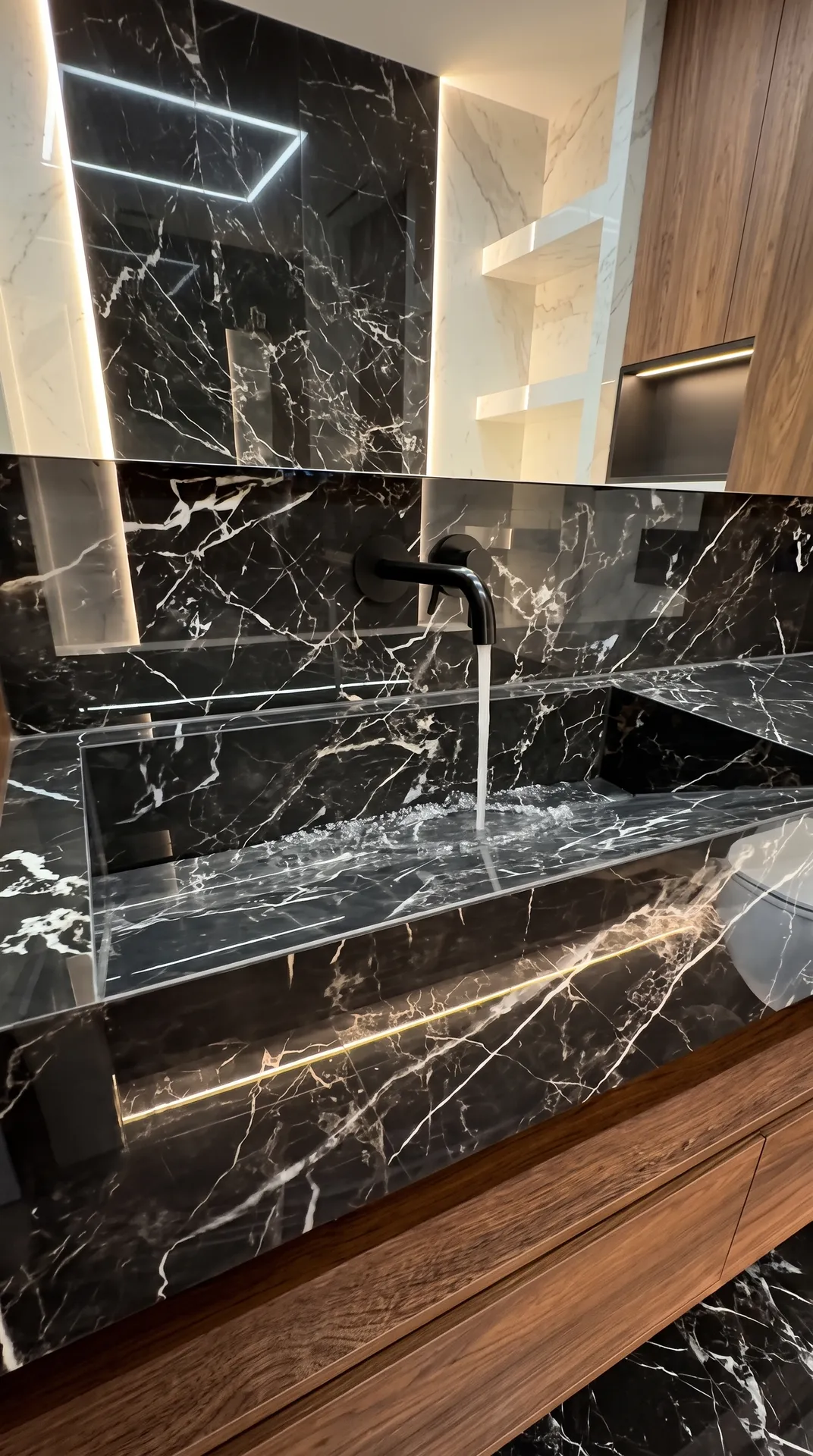
Most bathrooms end the same way: a catalogue washbasin, an acrylic shower tray, silicone in the corner. It works. But it looks like your neighbour's bathroom, and after a few years the silicone darkens and the whole interior starts to look tired.
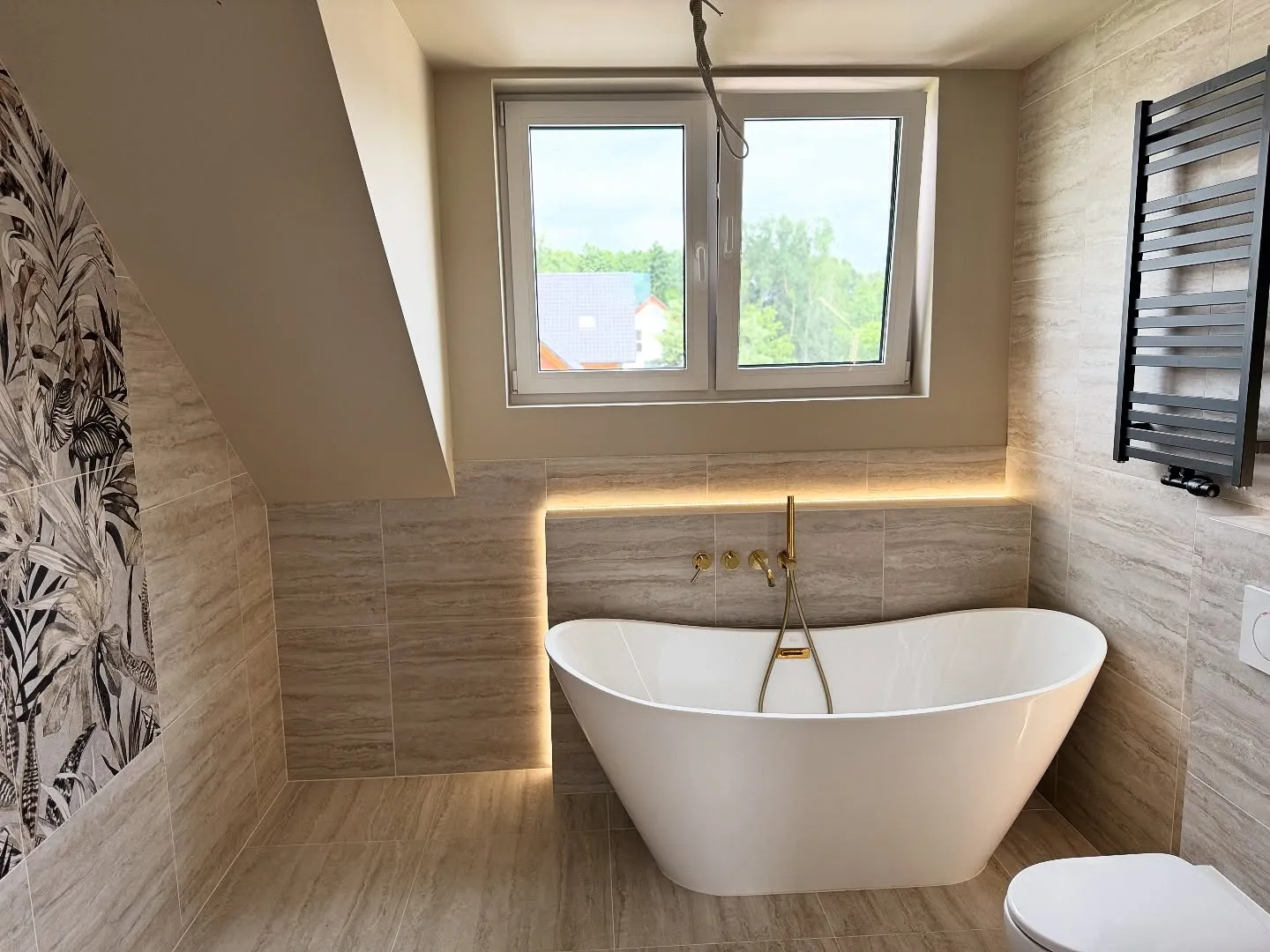
There is another way — a washbasin and shower tray built from the same tile as the rest of the bathroom, designed for the specific interior and the specific dimensions. No gaps between the countertop and the wall, no silicone in the place that always fails first.
This work is more expensive and takes longer than installing a ready-made element. It does not make sense in every bathroom. Below we describe how these elements are built, what drives their cost, when they are truly worth it — and when a catalogue solution is the better choice.
How a tiled washbasin differs from a ready-made one
A ready-made washbasin is a separate object placed on a surface. There is always a joint between two materials, and a joint has to be filled with something — usually silicone. Silicone is an organic material and over time becomes a breeding ground for mould. That is not an installation defect; it is a property of the material.
A tiled washbasin is an extension of the wall and the floor. The joint does not exist as a concept, because there are no two separate elements — there is one continuous surface. The same tile, the same grout, the same plane.
The second difference is size. A catalogue offers a finite number of dimensions. A made-to-measure element uses exactly the space you have — including niches, slopes and unusual geometry that a ready-made washbasin cannot handle.
There is also a difference that has to be stated honestly: a ready-made washbasin can be unscrewed and replaced in an afternoon. A tiled washbasin cannot be dismantled. It is a decision for years.
How it is built — step by step
- Design and measurement. Everything starts with an on-site measurement. Walls in apartment blocks and townhouses are rarely parallel, and a difference of a few millimetres over two metres is visible to the naked eye when a grout line runs along the surface. The design follows the real geometry of the room, not the drawing.
- Load-bearing structure. The base has to carry the weight of tile, adhesive and water — and, for a shower tray, the weight of a standing person as well. The structure is rigid; any deflection transfers to the grout and ends in a crack.
- The slope. This is the stage that decides whether the element works for years or starts to irritate after a month. The slope has to be steep enough for water to drain completely, and gentle enough to stay invisible. Too flat a surface holds water, and standing water leaves limescale — a white film that no ordinary cleaner will remove.
- Waterproofing. Applied under the entire structure, not just in the visible spots. It is the layer nobody will ever see and nobody thinks about — until a stain appears on the neighbour's ceiling one floor down.
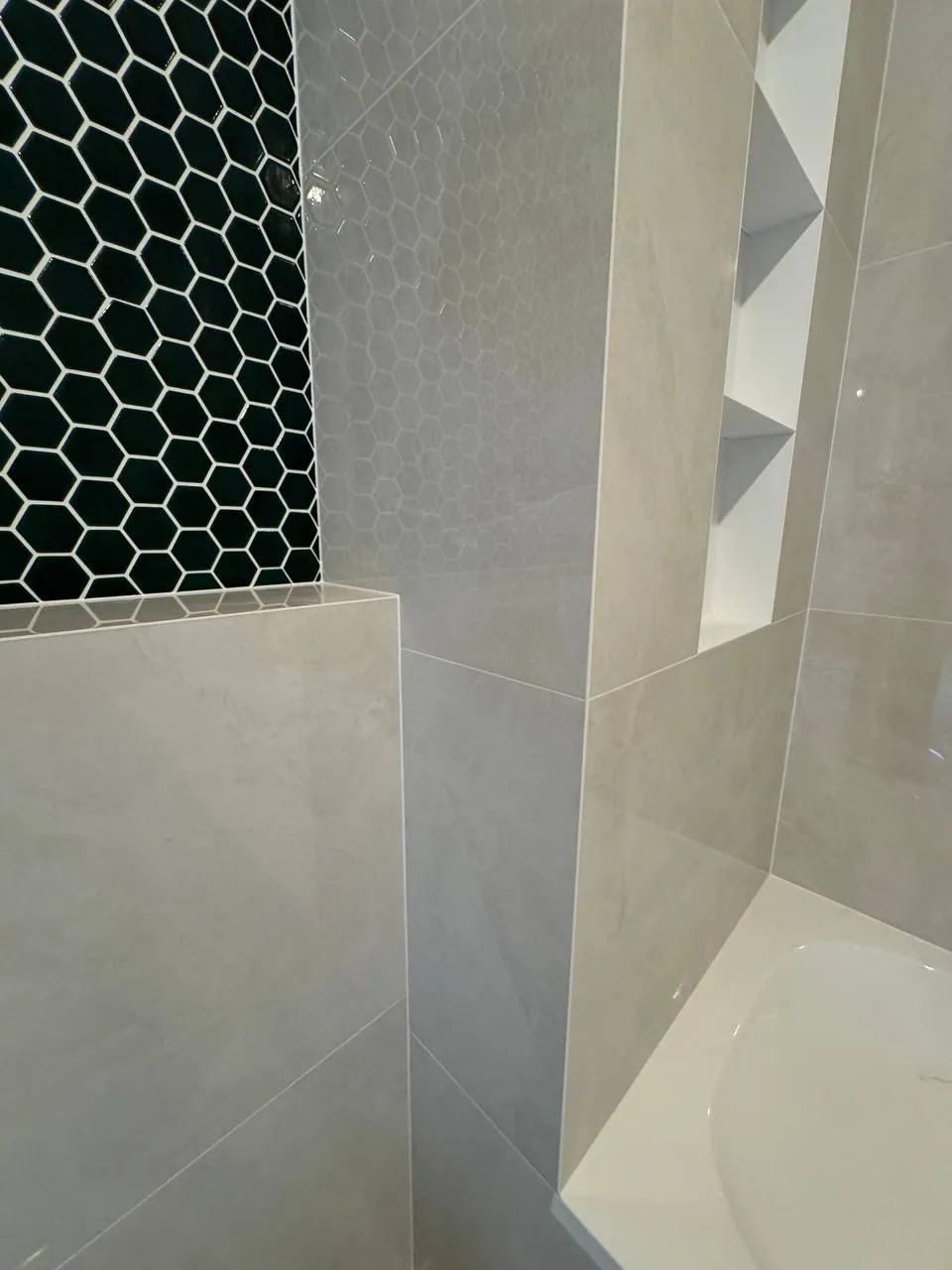
- Tiling. External corners are cut at 45 degrees, with no plastic trims. It takes professional cutting equipment and patience, but the result is an edge that reads as a single solid block, not two pieces butted together.
- Epoxy grout. In a spot permanently exposed to water, cement grout is not enough — it is absorbent and darkens over time. Epoxy grout is non-absorbent: it does not soak up water, does not stain and gives mould no place to grow.
What drives the cost
There is no single price, because no two builds are the same. The cost depends on a few concrete things — worth knowing so you can read any quote you receive:
- Surface area and shape. A simple rectangular form is a completely different job from curves, slopes or unusual angles. Every departure from a straight line means extra cuts and extra time.
- Tile format. The larger the format, the fewer grout lines and the better the effect — but also the harder the cutting and the smaller the margin for error. Large-format slabs need different equipment and a different way of organising the work than a standard format.
- The number of external corners. Every corner cut at 45 degrees is a separate, precise operation. An element with one corner and an element with six are two different quotes, even at the same surface area.
- The type of grout. Epoxy grout is more expensive than cement grout and harder to apply. In this application we consider it a necessity, not an option.
- Whether the element is part of a full renovation. Building a washbasin as part of a complete bathroom renovation is cheaper than a separate order — the equipment is already on site, the waterproofing is being done anyway, and the work overlaps in time.
We give a specific figure after a measurement. Travelling to measure within Warsaw and the surrounding area is free, and you receive a detailed estimate within 48 hours — calculated to the złoty, with no “to be agreed later” lines.
Who it makes sense for — and who it does not
It makes sense if: you have an unusual dimension no catalogue covers; visual consistency of the whole interior matters to you; you plan to live in this home for a long time; you are doing the bathroom once and want to forget about it for years.
It does not make sense if: the flat is for rent or for sale in the short term; the budget is tight and the priority is finishing the renovation; you like changing the décor every few years. In those situations a ready-made washbasin is the more sensible choice — and we say so honestly.
The most common workmanship mistakes
We have seen every one of these in bathrooms after other crews:
- A slope that is too shallow. Water stands, limescale builds up, and after six months a white ring is visible.
- Cement grout instead of epoxy. It darkens within the first year, and mould appears in the corners.
- Skipped or sloppy waterproofing. The most expensive mistake, because it shows up last and requires dismantling the whole structure.
- Plastic corner trims instead of 45-degree cuts. Visible from day one; over time they yellow and come away.
- Adhesive without the right flexibility. With underfloor heating and the natural movement of a building, rigid adhesive leads to cracks and debonding.
How we work
We build tiled washbasins and shower trays in Warsaw and the surrounding area — both as part of a complete turnkey bathroom renovation and as a separate, standalone order.
All work is carried out under a contract with a 3-year warranty on workmanship. We report progress with photos and videos in a private Telegram channel set up for your project — you can follow every stage, including remotely.
Frequently asked questions
No. Epoxy grout is non-absorbent and cleans exactly like the tile itself, with standard bathroom products. There is no silicone joint — the part that usually blackens first.
With properly executed waterproofing and epoxy grout, water has no way under the structure. Mould appears where one of those stages was skipped or done carelessly.
A damaged fragment can be replaced locally. That is why it is always worth keeping spare tiles from the same production batch — the next batch can differ in shade.
Considerably longer. It is staged work, and every stage needs time for the material to cure. We give a specific timeline after the measurement, together with the estimate.
Yes — and often that is exactly where it makes the most sense. A made-to-measure element uses space a ready-made washbasin simply cannot handle.
Yes. A tiled shower tray with a linear drain is the most common standalone order in this category — especially when replacing an old enclosure with a walk-in shower.